Say hello to the all-new Corvette ZR1X, a wild machine from America that’s out to shake up the entire world of hypercars. If you’ve always dreamed of owning a car that can go toe-to-toe with the likes of Ferrari, McLaren, or even Bugatti, but without selling your house, your kidney, and your soul, this is the dream come true. The ZR1X isn’t just another fast car. It’s a bold, loud, and aggressive game-changer that’s set to redefine what performance and value truly mean.
Chevrolet took two of its baddest creations, the beastly ZR1 and the high-tech E-Ray, and smashed them together to build something truly next-level. Imagine a twin-turbo V8 engine paired with electric motors that send power to all four wheels, blasting out over 1,250 horsepower. That’s not just power, that’s superhero-level force. It’s like giving a rocket a steering wheel and a license plate.
And when it comes to speed? The numbers are just insane. This monster hits 0 to 60 mph in under 2 seconds. That’s not just fast, that’s “hold your breath and scream” fast. You won’t just feel the launch, your whole body will become the launch literally, the G-force that would pull you back is beyond immense. It’s faster than most people can think. Blink, and you’re gone. The ZR1X also borrows the smart hybrid tech from the E-Ray, which means it can cruise quietly when you want it to, or turn into a thunderstorm when you put your foot down. It’s the best of both worlds: calm when needed, savage when pushed. It’s part electric, part petrol-powered madness and it works like magic.
Now, let’s talk about the part that turns heads, the price. While Europe’s hypercars cost upwards of $1 million, the ZR1X is expected to cost under $200,000. That’s not just affordable in hypercar terms, that’s mind-blowing. You’re getting Bugatti-like speed and Ferrari-killing power for a price that makes this thing feel illegal in the best way possible. Looks? Oh, it’s fierce. Sharp angles, huge vents, carbon fiber parts, and a wide, low stance that screams, don’t mess with me. But even with all that, it’s still got that bold Corvette soul, confident, loud, and proud to be American “Muricaa”
The Corvette ZR1X isn’t just a car, it’s a shot fired straight at the heart of every overpriced European hypercar. It’s proof that America can build a car that’s just as fast, just as powerful, and way more accessible. This is the underdog that doesn’t just bark, it bites. And it’s about to eat the competition alive.
On a typical Monday morning, the roads in Accra are congested to the fullest because it is rush hour and everybody is heading to work or other important places. The roads are constantly congested during peak hours due to the growing number of cars in the country, yet, no road infrastructure to keep up with the pace. One would think the vehicles in the country are more than human beings. This is not just an Accra problem; it is a problem in Kumasi, Takoradi, and other urban settings.
Everyone aspires to own a car in Ghana, particularly used cars, due to their affordability, and statistics show that over 90 percent of Ghana’s vehicle imports are used and salvaged. Out of this, the Greater Accra Region has the highest number of registered vehicles, followed by Kumasi. Though the increasing number of vehicles may feel like growth for individuals and for the nation, there is more to transportation than just an endless stream of cars on our roads.
Difference between transportation and mobility
Mobility and transportation are often used interchangeably, but they have distinct meanings. Transportation connects people, cultures, cities, countries, and continents, serving as a pillar of modern societies and economies. It allows producers to sell their goods globally and travelers to discover new places. It ensures access to public services like health, education, and work, contributing to a better quality of life. Being connected to various forms of transport boosts economies in remote areas, creates jobs, and distributes wealth among the local population.
Mobility refers to the potential for movement and travel between places using various transportation modes, with ease and accessibility. Modern policies can enhance mobility by enabling efficient travel over longer distances through systems like Interstate highways with truck lanes, Bus Rapid Transit (BRT) with dedicated lanes, and Intelligent Traffic Management Systems. Technologies like connected CCTV, computer vision, cloud connectivity, and GPS communication further enhance road safety, capacity, and efficiency.
Why Ghana needs a mobility strategy
Over the years, Ghana has focused more on car accessibility, including the introduction of electric vehicle incentives, ride-hailing services like Bolt and Yango, car importation policies, and others. However, Traffic congestion is getting worse, environmental pollution due to carbon emissions is on the rise, and road safety is still a challenge. Meanwhile, people who don’t own cars still struggle with inconsistent, often unreliable public transport. Trotros break down mid-route, taxis sometimes charge more than the stipulated fare, among others.
A mobility strategy in Ghana should focus on a transportation system that is efficient, safe, and affordable for all citizens, including those without cars. This includes well-planned public transportation, walkable cities with sidewalks and crossings, bicycle lanes, ride-sharing and micro-mobility options like scooters or e-bikes, and tech-based solutions like route tracking apps or digital payment systems. A lack of a clear mobility strategy can lead to increased pollution and productivity loss.
Ghana would be following the footsteps of other African cities like Kigali, Cape Town, and Nairobi, which are already investing in structured urban mobility plans such as Bus Rapid Transit (BRT) and other smart transportation mediums. A 2021 study shows that in Rwanda, the emphasis placed by public authorities on the role of digital technologies in strategic national transformations has been evident since 2000. In the realm of mobility, the Rwandan government pursued a proactive policy of modernizing public transport services in the capital city of Kigali, heavily supported by digital technologies.
Conclusion
Imagine a Ghana where you can track buses, spend little or no time in traffic, safely transport people with disabilities and the elderly, bike to work without potholes, and have cleaner air. This shift in mindset will allow people more time to focus on family, work, and rest. We should have a mobility strategy that puts people at the center, not just vehicles; a future not just full of cars but an inclusive and efficient mobility system.
In a bid to improve the browsing experience, tech giant Microsoft has launched ‘Copilot Mode’, a new experimental mode in Microsoft Edge that uses artificial intelligence to help users search across all open tabs and handle tasks easily.
Edge’s Copilot Mode is a cutting-edge AI addition that improves your browser by predicting your next action. It collaborates with you to free your flow by slicing through distractions and reducing friction.
When a user opens a new tab in Edge with Copilot Mode enabled, they will see a single input box that includes web navigation, chat, and search. By understanding your intent, Copilot Mode speeds up the startup process. Copilot may see all of your open tabs with your consent so it can fully comprehend the context of your online search.
Source: Microsoft
Copilot in Edge supports natural voice navigation, allowing you to speak directly to Copilot about what you’re trying to do, whether it’s locating information on a page or having Copilot open a few tabs to compare options between products. In the future, you will be able to give Copilot permission to access the additional browser context it needs, such as your history and credentials.
You can bring Copilot into any webpage without losing your place, converting recipe measurements or translating content while keeping the original page visible. It’s perfect to help cut through distractions like pop-ups and long-winded blog posts and get straight to the information you need.
Source: Microsoft
The new feature will guide users in tasks and organize browsing into topic-based journeys. These journeys offer suggestions for what to do next, helping users stay focused and keep projects moving forward. Copilot will only access browsing content when enabled, and users will always be in control.
Copilot Mode ensures that user data is handled and protected following the Microsoft Privacy Statement, and clear visual cues are always available when Copilot is viewing or listening.
Fifteen people have lost their lives, while four others have been left severely injured in a tragic accident on the Juaso-Nkawkaw stretch of the Accra-Kumasi highway
The incident, which occurred around 3 p.m. on Monday, reportedly involved members of the Obogu Saviour Church youth group, including the children of the Head Pastor of the Church in Obogu.
Church elder Kofi Baah confirmed to Adom News that the gory accident involved a fuel tanker and a Ford Transit that was transporting the church members from a youth event.
“The children left for a religious retreat at Koforidua on Friday for a congress. We were home when we received distress call of the accident involving members of our youth ministry. We rushed to Juaso Hospital only to witness this mass casualty. While some parents’ lost two children, some have lost three of their children,’ an elder of the church, Kofi Baah told Adom FM’s reporter, Isaac Amoako.
According to eyewitness reports, a tyre on the fuel tanker, which was heading towards Accra, burst, causing the to veer off its lane and collide with the Ford travelling in the opposite direction.
The remains of the deceased have been deposited at the hospital morgue.
Officials from the Juaso Motor Traffic and Transport Directorate (MTTD), the Ambulance Service, and the Ghana National Fire Service in Konongo and Juaso responded promptly to the scene to assist with rescue efforts and clear the wreckage, attending to the victims aged between 4 and 21 years.
Many drivers fail to understand the serious consequences of disregarding road safety rules, such as improper overtaking. This, along with other reckless driving behaviors, continues to cause fatal accidents. Drivers must be strongly cautioned against such practices to protect the lives of innocent passengers.
Volvo is turning heads in South Africa with the launch of four stunning new luxury models, all part of its bold push toward electric mobility. From rugged off-roaders to sleek sedans, the Swedish automaker is proving that sustainability and style can go hand in hand. These new arrivals are not just cars,they’re a statement of Volvo’s commitment to innovation, safety, and a greener future.
Leading the charge is the EX30 Cross Country, a tough and stylish version of Volvo’s best-selling electric crossover. Designed for outdoor lovers, it features flared wheel arches, skid plates, and a raised ground clearance of 195mm. With dual motors delivering 315kW and 543Nm of torque, this all-wheel-drive beast can sprint from 0 to 100km/h in just 3.6 seconds.
It’s powered by a 69kWh battery that offers a range of up to 427km, and fast charging gets you from 10% to 80% in under 30 minutes. According to TopAuto, the EX30 Cross Country is expected to hit showrooms before the end of September 2025.
XC60 and XC90: Hybrid Luxury Reimagined
volvo-xc60-vs-xc90-image credit-carwow
Next up are the refreshed XC60 and XC90 SUVs. These models blend Volvo’s classic elegance with modern tech and hybrid power. Both feature updated exteriors, minimalist interiors, and a new 11.2-inch infotainment screen.
Buyers can choose between mild hybrid and plug-in hybrid (PHEV) options. The PHEV versions pack a punch with up to 340kW and 709Nm of torque, plus an electric range of up to 77km. As TopAuto reports, these SUVs will arrive in spring 2025, offering South Africans more choice as they shift to electric driving.
ES90 Sedan: Pure Electric Sophistication
Image credit-Road and Track
Breaking away from Volvo’s SUV-heavy lineup is the all-new ES90, a luxury electric sedan set to launch in early 2026. It’s one of Volvo’s most advanced models, featuring LiDAR technology for enhanced safety and multiple powertrain options.
The top-tier version boasts 500kW and 870Nm, rocketing from 0 to 100km/h in under 4 seconds. With battery sizes up to 106kWh, the ES90 offers a range of up to 700km. According to TopAuto, this sedan is designed for drivers who want cutting-edge tech wrapped in timeless luxury.
Volvo’s Vision for South Africa
Volvo’s new Managing Director, Grant Locke, says the brand is committed to offering South Africans more electric options and investing in local operations. As TopAuto notes, this is part of Volvo’s plan to grow and lead in the premium EV space.
With these four models, Volvo is not just selling cars, it’s shaping the future of driving in South Africa. Whether you crave adventure, comfort, or speed, there’s an electric Volvo, ready to deliver.
Which Volvo Model Suits You Best?
If you’re into adventure and off-road escapes, the EX30 Cross Country is your match. It’s powerful with 315kW and 543Nm torque, plus all-wheel-drive for tough terrain. It can hit 100km/h in just 3.6 seconds and gives you up to 427km of range. Built for the wild, this model is rugged and ready. According to TopAuto, it’s landing in South Africa by September 2025.
For families and daily commuters, the refreshed XC60 and XC90 offer a balance of luxury and practicality. You can choose mild hybrid or plug-in hybrid (PHEV), with up to 340kW and 709Nm in the PHEV versions.
These give you an electric range of around 77km ideal for school runs or city errands. Updated interiors and tech like an 11.2-inch screen make them super comfortable. As MSN News reports, they’ll hit the roads this spring.
Now, if you’re all about luxury and cutting-edge tech, the all-electric ES90 sedan takes the crown. With up to 500kW and 870Nm torque, it’s incredibly fast , under 4 seconds from 0 to 100km/h. Its biggest battery offers a jaw-dropping range of up to 700km. It even comes with LiDAR safety technology, perfect for executives and tech enthusiasts. Launch is set for early 2026, according to Cars.co.za.
Want long range? Go ES90. Love adventure? EX30 Cross Country is built for it.
Need comfort with flexibility? XC60 and XC90 make great everyday companions.
Volvo’s vision in South Africa isn’t just about selling cars it’s about empowering drivers to choose electric in a way that fits their lives. And as Dealerfloor shares, new EV buyers will enjoy perks like free public charging and home wallbox installations.
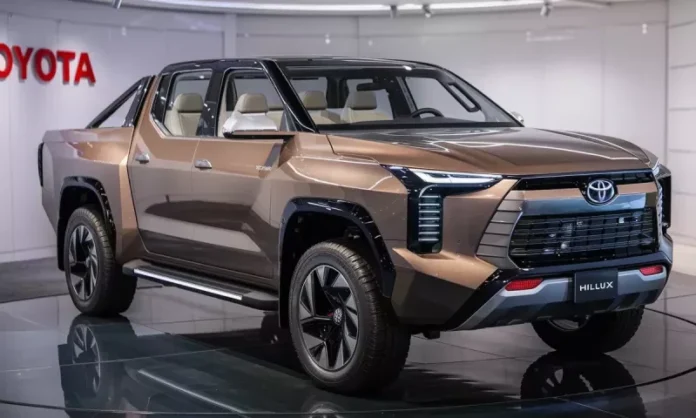
The Toyota Hilux has long been known as one of the world’s most rugged and dependable workhorses, and in 2025, that reputation is only getting stronger. Whether you’re navigating dusty bush roads, hauling equipment to a job site, or tackling weekend adventures, the next-generation Hilux has been reimagined to offer even more strength, tech, and comfort without losing its legendary toughness.
The new model keeps its “go-anywhere, do-anything” DNA, but now with a bold new design and a clear eye on the future.
2025 Toyota Hilux
On the outside, the 2025 Hilux wears a more aggressive and modern look. It features a redesigned front end with a larger grille, sleeker LED headlamps, and a sportier bumper setup. Toyota has added fresh alloy wheel designs and bold new paint options that give it a more striking road presence. At the rear, the loading bed has been updated with practical features such as a powered tailgate, reinforced bed liners, and integrated power outlets—perfect for running tools, lights, or even campsite equipment in remote locations.
Under the hood, the Hilux is powered by Toyota’s trusted 2.8-liter turbo-diesel engine, producing a solid 204 horsepower and 500 Nm of torque. Available with either a 6-speed manual or automatic transmission, it delivers serious pulling power and off-road performance.
2025 Toyota Hilux engine
It comes standard with a 4×4 system that includes low-range gearing, a locking rear differential, and ample ground clearance. Combined with its ladder-frame chassis and updated suspension system, this truck is more than capable of handling rough terrain, steep climbs, and heavy loads with ease.
Step inside, and the cabin might surprise even seasoned Hilux fans. It’s no longer just a utility-focused interior—it now offers comfort and technology that rival many modern SUVs. A 10.1-inch infotainment touchscreen comes standard, with an optional 12.3-inch version on higher trims.
2025 Toyota Hilux interior2025 Toyota Hilux interior
Wireless Apple CarPlay and Android Auto connectivity are available for the first time, alongside features like a digital instrument cluster, push-button start, automatic climate control, and wireless charging. With leather upholstery, improved sound insulation, and spacious seating, the 2025 Hilux is just as comfortable for long highway drives as it is on job sites.
Toyota has also equipped the new Hilux with its latest suite of advanced safety features. These include adaptive cruise control, lane-keep assist, blind-spot monitoring, pre-collision braking, and a 360-degree camera system to make tight maneuvers safer. Through the MyToyota connected app, drivers can now remotely lock and unlock the vehicle, receive geofencing alerts, and check the vehicle’s status—all from their smartphone.
2025 Toyota Hilux GR-Sport
Looking to the future, Toyota isn’t stopping at diesel. An all-electric version of the Hilux is confirmed to go into production by the end of 2025, offering a clean, quiet, and capable alternative for those seeking lower emissions without sacrificing performance. The company is also developing a hydrogen fuel-cell variant, reinforcing its commitment to sustainable innovation while maintaining the Hilux’s utility and off-road capabilities.
In all, the 2025 Toyota Hilux combines its legendary durability with cutting-edge technology, comfort, and forward-thinking design. Whether it’s used for hard work, weekend adventures, or simply navigating rough terrain, the Hilux continues to prove why it’s one of the most respected and reliable trucks on the planet. With its refreshed look, improved features, and a roadmap for cleaner motoring, the Hilux isn’t just surviving in a modern world—it’s thriving.
If you live in Accra, Kumasi, or even Takoradi, you’ve probably noticed how packed the roads have become. The cities are expanding fast, and with that comes a new set of problems: traffic jams, air pollution, and the ever-rising cost of fuel. For many Ghanaians, car ownership is more of a burden than a joy. But what if we told you there’s a new kind of car that’s small enough to zip through tight streets, light enough to save energy, and clean enough to protect our environment?
Meet the Toyota FT-Me, a compact electric car that could revolutionize the way we think about driving in congested African cities like Lagos, Accra, and others.
FT-Me
The world is changing and not just environmentally, but socially and economically too. As more people become environmentally conscious, car companies are under pressure to create vehicles that pollute less, cost less to run, and still provide comfort and style.
FT-Me
Toyota, one of the most respected car brands globally, has taken a bold step in the right direction with its FT-Me concept. This pint-sized electric vehicle (EV) is their answer to the rising demand for sustainable urban mobility, especially in places where space is tight and traffic is crazy.
What exactly is the FT-Me?
Think of the FT-Me as the opposite of today’s oversized SUVs. It’s so small, it makes a Toyota Vitz look big! At just under 2.5 meters long, the FT-Me is even shorter than the famous Smart ForTwo. You can literally park two of these in one regular parking space. Imagine that in packed areas like the busy Makola or Madina market. But don’t let its size drop your interest. This car is big on innovation.
What does the car run on?
FT-Me
One of the FT-Me’s coolest features is its solar panel roof, which soaks up sunlight during the day to give the battery extra charge. On a very hot afternoon in Accra’s sun, it can get enough energy to drive up to 30 km, all without plugging into a wall. For sure, in Ghana, with our generous sunshine, that’s a big win.
While Toyota hasn’t shared the total battery capacity yet, the car is designed for short city trips like errands, school runs, or office commutes. For the average Ghanaian city dweller, that’s more than enough.
More eco-friendly than most EVs
While all electric vehicles contribute to reducing pollution, the Toyota FT-Me takes eco-friendliness to a whole new level. It consumes three times less energy per kilometer than conventional EVs, making it significantly more efficient for urban commuting. In addition, the FT-Me is constructed using 90% recycled materials, which drastically reduces the environmental impact of its production.
FT-Me
It boasts a 90% smaller carbon footprint compared to most traditional cars. These impressive stats make the FT-Me one of the greenest vehicles ever developed, an ideal solution for countries like Ghana, where the push for climate action and cleaner transportation is becoming increasingly urgent.
There is also something bigger that Toyota had in mind while envisioning this car. The FT-Me is built to accommodate drivers with disabilities. There are no pedals; instead, all acceleration and braking are done with hand controls on the steering wheel. That means people in wheelchairs or with limited mobility can drive this car without any special modifications.
Specs built for safety and simplicity
Because of its lightweight design (just around 425 kg), the FT-Me fits into a special category of vehicles in Europe called quadricycles. In some countries, teenagers as young as 14 can drive them. While that may not apply directly in Ghana (yet), it shows how safe and easy this car is to handle.
Below are key highlights of the FT-Me car
FT-Me
Max speed: 45 km/h (great for city driving) Wheels: 14-inch with ultra-thin tires Windows: Only a small section opens — it’s more sealed and aerodynamic Mirrors: Side cameras instead of traditional mirrors (hello, futuristic tech
Who is this car really for?
The FT-Me isn’t designed for long-distance road trips to Tamale or Cape Coast. Instead, it’s for people who live and work in the city. Small business owners, courier services, health workers, students, and even tech-savvy young professionals who want a convenient, cost-effective ride.
It also opens a conversation about what car ownership could look like in Africa — smarter, smaller, and more socially responsible.
The Toyota FT-Me proves that bigger isn’t always better. With its compact size, solar-charging ability, and accessibility features, it shows what’s possible when innovation meets empathy. In a world struggling with climate change and crowded cities, this tiny EV just might be the giant leap we need toward a cleaner, fairer future.
Importing cars into Ghana is not an easy task, not even for the experts. Because it is quite the process. Ghana is among the countries on the continent with the highest number of imported vehicles annually, with over 90 percent of imported vehicles used, mostly from Asia and Europe. This trend is expected to continue due to the affordability of used cars.
Importing a vehicle involves the process of purchasing, shipping, and clearing the vehicle once it arrives in the country. When purchasing and shipping a vehicle, all relevant documentation must be kept properly to ensure a smooth clearance process. Every importer needs to thoroughly understand the process involved in importation to ensure smooth clearance.
The first purchase price of a car, including the manufacturer’s price at the time of manufacture, is used for Vehicle Duty Calculation. This price is subject to an additional 50% depreciation, then converted to Free on Board (FOB) before the current exchange rate is applied. The duty on an imported vehicle can be checked in ICUMS using the chassis number, model, year, and make.
Importing without an agent
To import and clear your car at the port without an agent’s assistance, sign up with the Customs Division of GRA as a Clearing Agent. You must submit a written request or apply electronically to the Commissioner-General. After completing the necessary processes, approval for eligibility will be granted.
Documents needed
You will need to have these documents ready: a driver’s license issued in Ghana or an International Driver’s ID. Original Copies of Purchase Invoice and Insurance. Certificate of Title. Original Bill of Lading Copy (including vehicle type; both chassis and engine numbers; date of production, NOT sale date)
Cost of Importation
To calculate automobile duty in Ghana, first determine the purchase price and the manufacturer’s price at the time of manufacture. Customs applies depreciation based on the year of manufacture. For example, a car bought in 2012 at GH₵22,000 receives a 30% rebate, followed by an additional 50% depreciation. The car is then free on board (FOB), and the current exchange rate is applied before freight and insurance are considered.
Primary taxations
These are the various fees that make up the total amount of taxes owed to car importers for various car models:
Diesel motor cars:
Engine displacement not exceeding 1500cc: import duty is 5%, VAT is 12.5%, NHIL is 2.5%, GETFund levy is 2.5%, AU levy is 0.2%, ECOWAS levy is 0.5%, EXIM levy is 0.75%, Special Import levy is 2%.
Engine displacement between 1500cc and 2500cc: import duty is 10%, VAT is 12.5%, NHIL is 2.5%, GETFund levy is 2.5%, AU levy is 0.2%, ECOWAS levy is 0.5%, EXIM levy is 0.75%, Special Import levy is 2%;
Engine displacement exceeding 2500cc: import duty is 20%, VAT is 12.5%, NHIL is 2.5%, GETFund levy is 2.5%, AU levy is 0.2%, ECOWAS levy is 0.5%, EXIM levy is 0.75%, Special Import levy is 2%;
Petrol motor cars
Engine displacement not exceeding 1000: import duty is 5%, VAT is 12.5%, NHIL is 2.5%, GETFund levy is 2.5%, AU levy is 0.2%, ECOWAS levy is 0.5%, EXIM levy is 0.75%, Special Import levy is 2%;
Engine displacement between 1000cc and 3000cc: import duty is 10%, VAT is 12.5%, NHIL is 2.5%, GETFund levy is 2.5%, AU levy is 0.2%, ECOWAS levy is 0.5%, EXIM levy is 0.75%, Special Import levy is 2%.
Engine displacement exceeding 3000cc: import duty is 20%, VAT is 12.5%, NHIL is 2.5%, GETFund levy is 2.5%, AU levy is 0.2%, ECOWAS levy is 0.5%, EXIM levy is 0.75%, SPECIAL IMPORT levy is 2%.
Pick-ups
Import duty is 5%, VAT is 12.5%, NHIL is 2.5%, GETFund levy is 2.5%, AU levy is 0.2%, ECOWAS levy is 0.5%, EXIM levy is 0.75%, and Special Import levy is 2%.
Third Party Charges
Local shipping line charges are paid to the carrier
Terminal handling charges
Safe bond terminal handling charges (optional) rent for the car whilst it is in the terminal
Trade number plate GH₵154
Clearing Agent charges
Before importing vehicles in Ghana, importers must consult with relevant parties to ensure they meet all clearing requirements at the ports. Once a consignee has the vehicle’s title and Bill of Lading, they can pay duty before it arrives. Only the President, state institutions, and diplomatic missions are exempt from duty payment. If a vehicle is sold to an individual or private company, duties must be paid before the ownership change.
Restricted Vehicles to Import
These vehicles are only allowed to be imported by specialized institutions
Armoured Vehicles – Ghana Armed Forces
Ambulances – Hospitals or the Government of Ghana
Hearses – Funeral homes
Fire tankers/trucks – Ghana National Fire Service
Dispensation for right–hand steering vehicles
Customs laws prohibit right-hand steering automobiles from entering the country, but a policy dispensation allows for consideration upon the importer’s application by the Minister of Trade. After port processes, right-hand steering vehicles are dismantled and refitted for use on roads.
Vehicle importation into Ghana is not an easy task. Still, with the right process, one can have a trouble-free importation and clearing, with or without an agent, as a private individual or a government agency.
Samsung’s powerful Galaxy Watch 6 Classic is designed for Android users who appreciate flair and complexity. The standout feature of earlier generations, which is the rotating bezel, is combined with modern Wear OS features, reliable performance, and robust health tracking in this fascinating device.
The iconic spinning bezel returned with a smoother, more elegant, and simpler navigation experience. The stainless steel case matches well with the sapphire crystal glass that is long-lasting and resistant to dust and water. The display comes in 43mm and 47mm sizes, and has bright Super AMOLED clarity and resolutions of up to 480×480 pixels, giving more content and improved touch responsiveness.
Internal components of the watch include Samsung’s powerful Exynos W930 chipset, Wear OS 4 + One UI Watch 5, 2GB RAM, and 16GB storage, offering responsive health tracking, smooth performance, and quick app transitions. The device give up to 40 hours of battery life when the Always-On Display is off and about 30 hours when it is on. Even with sleep tracking enabled, real-world use usually results in 1.5 to 2 full days. You can charge from about 20% to full in 45 to 60 minutes.
While the user interface stays clear and simple, the rotating bezel improves functionality and navigation. Some users prefer Wear OS because of its flexibility and Android compatibility, while others find it slower than the Apple Watch. The watch is compatible with other Android devices and integrates flawlessly with Samsung Health and other apps.
Even with its incredible features, the watch is larger and heavier, particularly the 47mm model, which may be too much for those with smaller wrists. Additionally, certain functions are exclusive to Samsung phones, and because of the lower screen bezels, touchscreen controls may seem restricted.
Despite not being as effective as some fitness-focused models, its extended battery life and advanced health sensors make it comfortable to wear and sleep with. It offers a smartwatch that blends premium flair with everyday usability in a classic and fashionable way. And maybe, this is why the older people love this device.
Electric vehicles are no longer confined to wealthy regions. Across Africa, governments, entrepreneurs, and tech innovators are shifting gears toward cleaner, more efficient transport. From electric buses navigating Nairobi’s streets to solar-charging stations sprouting in Casablanca, the continent is quietly building an electric revolution tailored to local realities. Below, we explore ten African countries leading the charge.
South Africa
South Africa is setting its sights on becoming an electric vehicle manufacturing powerhouse. on July 24, 2025, President Cyril Ramaphosa delivered a powerful speech at the BMW Rosslyn plant, celebrating the launch of the BMW X3 Plug-in Hybrid. He called the event a “symbol of trust” in the country’s industrial capability and reaffirmed South Africa’s goal to become a global leader in new energy vehicle production.
Electric charging station-Capetown-image credit-ESI.Africa.com
Ramaphosa highlighted the significance of the Electric Vehicle White Paper and its incentive programme, which aim to foster a stable environment for investment, localization, and industry growth. With rich deposits of platinum and manganese, a skilled workforce, and an established automotive sector, South Africa is well-positioned to produce battery electric vehicles, plug-in hybrids, and even hydrogen-powered models.
Despite challenges like load-shedding, South Africa is exploring smart charging systems and vehicle-to-grid technology. Charging stations are expanding in cities like Johannesburg, Cape Town, and Durban, and new manufacturing incentives are attracting global investors. The country’s journey toward clean mobility is powered by ambition, planning, and a firm presidential push.
Ghana
Ghana is emerging as a regional leader in electric mobility, thanks to a blend of bold government policy and grassroots innovation. In December 2023, the Ministry of Transport officially launched the National Electric Vehicle Policy, designed to reduce emissions, promote sustainable transport, and align with global climate goals
The policy emphasizes a just and inclusive transition, aiming to benefit all segments of society while fostering innovation and job creation. It includes import duty waivers for EVs, incentives for charging infrastructure, and training programs for mechanics to retrofit and maintain electric vehicles.
Ghana Solar station-image credit- GNBCC
As of late 2023, Ghana had an estimated 17,000 electric vehicles on its roads — the highest in Africa according to the Energy Minister, with a growing fleet of electric motorbikes, tuk-tuks, and private cars. Local companies like Drive EV Gh and X-Charge EV GH are building showrooms and charging stations, while the Drive Electric Initiative is promoting solar-powered infrastructure and public awareness campaigns.
The government’s roadmap includes ambitious targets: 60% of government fleets to be electric by 2035, and a complete phase-out of petrol and diesel vehicle imports by 2045. Ghana is also investing in assembling electric buses and cars locally, with the first batch of e-buses already commissioned for Metro Mass Transit.
Charging infrastructure is expanding through public-private partnerships, with solar-powered stations being piloted in Accra and along major highways. The Energy Commission recently launched Ghana’s first solar EV charging station, showcasing the country’s commitment to clean energy and innovation
Morocco
Image credit-Morroco World News
Morocco is transforming into a green auto export powerhouse. The country aims to produce 100,000 EVs by 2025 and make 60 percent of its car exports electric by 2030. Global battery firms are investing billions, and local companies like NEO Motors are championing the “Made in Morocco” label. With 70 percent of the world’s phosphate reserves, the country is also building strategic battery value chains. Infrastructure plans include 2,500 charging stations by 2026, often powered by solar energy according to Morocco World News
Kenya
Image credit- Techpoint
Kenya’s vibrant startup scene is electrifying transport. Companies like BasiGo and Roam Electric are manufacturing buses and bikes built for local needs. Import duties were lowered in 2019, and the government is finalizing a National E-Mobility Policy. With over 90 percent of electricity sourced from renewables, Kenya’s energy profile is ideal for electric mobility. Private charging networks like CHAJI Services are helping close the infrastructure gap.
Nigeria
Nigeria is laying the foundations for EV expansion. While a comprehensive policy is still in the works, the National Automotive Design and Development Council is promoting tax exemptions and local manufacturing. Charging infrastructure is growing, especially in Lagos and university campuses. Startups like MAX and Jet Motors are developing electric buses and vehicles, with new public campaigns pushing EV awareness
Rwanda
Image credit-Empower Africa
Rwanda is electrifying its motorcycle taxi industry with help from startups like Ampersand. These bikes include battery-swapping features and are backed by government incentives. Rwanda is also turning used EV batteries into mini-grid storage, embracing circular economy principles. The country’s focused policies and supportive ecosystem are helping it scale quickly as cited by New Time Rwanda
Ethiopia
Image credit-Climate home news
Ethiopia offers full tax breaks on imported EVs and zero duties for locally assembled ones. More than 30,000 EVs are already on the roads, and the government plans to add 148,000 electric cars and 4,800 buses by 2032. With near-total reliance on renewable electricity, the country’s clean energy profile is perfect for electric mobility. Local companies like Marathon Motors are assembling vehicles, and new stations are being built through public-private partnerships , according to Addis Standard
Tanzania
Tanzania is witnessing a quiet revolution led by electric motorbikes and tuk-tuks. Startups such as WAGA Motion and TRI are producing affordable EVs for urban markets. A national EV policy is expected soon, and the government is exploring tax incentives and solar-powered infrastructure. Despite challenges like low rural access and limited technician training, the momentum is growing
Benin
Image credit-Business Africa
Benin is transforming its motorcycle culture with over 3,000 electric bikes on the road. Startups like Spiro are converting petrol two-wheelers into electric ones, offering affordable options for city commuting. The government is supporting pilot programs and expanding charging stations through donor partnerships.
Angola
Angola’s EV journey is in its early stages. With over 1,000 electric cars and growing interest, the government is seeking partnerships for infrastructure and assembly. Solar-powered charging and tax incentives are part of the roadmap. Angola’s move into clean mobility could unlock broader regional opportunities
Conclusion
Africa’s move to electric vehicles is not just copying other countries. It is using smart local ideas, new policies, and clean energy. Each country is creating its own way forward, like Morocco with battery-making and Rwanda with electric bikes. As the world shifts to electric transport, Africa is also moving ahead in its own strong and unique way.