

- Advertisement -spot_img
Home Blog Page 15

What to expect from the Apple Watch Ultra 3

0
Apple Watch Ultra 3

Apple fans, the wait for the Apple Watch Ultra 3 is almost over. The next-generation smartwatch promises some exciting upgrades that might make the two-year gap worthwhile.

Set to be unveiled in September 2025, the Ultra 3 could be Apple’s most advanced and rugged wearable yet, aimed at outdoor adventurers, fitness enthusiasts, and tech lovers who want performance and durability packed into one bold device.

Apple Watch Ultra 3

The Apple Watch Ultra line, first introduced in 2022, was a dramatic shift from the traditional Apple Watch design. It featured a 49mm titanium case, flat sapphire front crystal, brighter always-on Retina display, enhanced GPS accuracy, a new Action Button, dual speakers, and an extended battery life of up to 36 hours (60 in Low Power Mode). It was Apple’s first real foray into the “ultra-durable, high-performance smartwatch” market — think competitors like Garmin Fenix or Suunto.

The Apple Watch Ultra 2, released in 2023, refined this formula by introducing an S9 SiP chip, Double Tap gesture, improved display brightness (up to 3,000 nits), on-device Siri processing, and a black titanium case option — a sleek new look but with only minor internal upgrades.

What to expect from the Apple Watch Ultra 3

Apple Watch Ultra 3

After skipping a 2024 refresh, Apple is reportedly preparing a much bigger leap with the Ultra 3. Here’s what to expect;

  • 5G Support: This would be the first Apple Watch with 5G, replacing the LTE connection in Ultra 2. It could significantly boost data speeds, streaming quality, and app performance (Ideal for high-intensity outdoor activities)
  • Satellite Connectivity: A game-changer for those who hike, sail, or explore remote areas. Ultra 3 may let users send and receive text messages even when there’s no cellular or Wi-Fi coverage, similar to the satellite SOS feature on the iPhone 14 and 15 series.
  • Wider-Angle OLED Display: Apple is rumored to improve the display’s viewing angles and brightness. It may also offer a higher refresh rate, making the always-on display even smoother.
  • New S10 Chip (or Better): Expect faster performance and improved power efficiency — the S10 would be a notable upgrade from the S9 in Ultra 2, possibly unlocking new AI-driven health or fitness features.
  • (Possible) Blood Pressure Monitoring: Long rumored and highly requested, this feature may or may not make it to the Ultra 3 due to reported development delays. But if it does, it would place Apple ahead of several smartwatch competitors in the health-tech space.

How Is It Different from Ultra 2?

While Ultra 2 gave us incremental changes, the Ultra 3 could deliver more connectivity independence, pushing the Apple Watch closer to becoming a true standalone device, useful even without your iPhone nearby. Satellite texting and 5G will be particularly appealing to adventurers and frequent travelers. The display improvements and new chip also suggest smoother day-to-day usage and better app responsiveness.

That said, some users are still calling for more customization options, particularly smaller sizes, as the 49mm case is too large for many wrists. Apple Watch Series models offer 41mm and 45mm options, and many feel it’s time the Ultra line did the same.

The Apple Watch Ultra 3 looks like it will mark the biggest update to the Ultra line yet, moving beyond minor cosmetic changes to deliver serious upgrades in connectivity, performance, and possibly health tracking. If you skipped the Ultra 2, the Ultra 3 could be the right time to invest, especially if you value long battery life, rugged design, and cutting-edge tech in a wrist-worn device.

Everybody’s favorite the MB C300 W206 is seeing a mid cycle refresh

0

Everyone’s favorite compact luxury sedan, the Mercedes-Benz C300 “W206,” is getting a quiet but well-deserved mid-cycle refresh. This update doesn’t come with flashy changes or dramatic redesigns; instead, it focuses on subtle improvements that make a good car even better. The W206 has always been known for its smooth blend of everyday comfort, premium feel, and tech-savvy features. With this update, Mercedes-Benz is simply fine-tuning what already works, making small changes that drivers will appreciate without changing the overall vibe of the car.

From the outside, you might not spot the differences right away, and that’s intentional. Mercedes is sticking to a “don’t fix what’s not broken” approach. The refreshed version comes with slightly redesigned headlights and taillights, minor updates to the front and rear bumpers, and a refined grille. These tweaks give the car a cleaner, more grown-up look without messing with its sleek and classy appearance. It still looks like the W206 we all love, just with a bit more sharpness around the edges.

Inside, the cabin remains one of the nicest in its class, but Mercedes has made a few thoughtful upgrades. There are improved interior materials in certain trims, some new ambient lighting options, and a smoother, faster infotainment system thanks to the latest MBUX software update. Nothing too flashy, but these changes help the car feel more refined and up-to-date without losing the comfort and elegance it’s known for. Under the hood, things stay mostly the same. The C300 still runs on its reliable 2.0-liter turbocharged four-cylinder engine paired with a mild-hybrid system. It’s not about chasing big power gains, but rather improving how the car responds and performs during everyday driving. The throttle is a little more responsive, and everything feels a bit smoother, making the driving experience more enjoyable. The suspension setup hasn’t changed much either, which is a good thing this car still glides over rough roads while staying composed through corners.

What makes this refresh special isn’t anything groundbreaking; it’s the way Mercedes has focused on the little things. They listened to feedback from drivers, fine-tuned the details, and kept what people already liked. There’s no dramatic change because there didn’t need to be one. The W206 already had the style, comfort, and smart features people wanted. Now, it’s just a bit more refined. In a world where car brands are constantly trying to outdo themselves with bold changes, Mercedes reminds us that sometimes, keeping things simple and smart is what really stands out. The updated C300 doesn’t scream for attention, but it still earns it.

Top features Kia Carens Clavis EV shares with its ICE-powered counterpart

0
Kia Carens Clavis

Ahead of its July 15 launch, Kia has unveiled the Carens Clavis EV, the company’s first seven-seater and mass-market electric vehicle. A direct rival of the BYD eMax 7, the electric Carens MPV boasts a more environmentally friendly powertrain and distinctive design enhancements.

The Kia Carens Clavis EV is expected to share several features with its facelifted version of the ICE counterpart, which was launched earlier this year. Some of the features are:

Dual digital displays

Like the ICE variant, the Kia Carens Clavis EV is anticipated to include a dual floating-screen configuration with a 12.25-inch digital driver’s display and a 12.25-inch touchscreen infotainment system. The future vehicle is also anticipated to have this configuration, which was initially observed in the Kia Syros.

Electrically adjustable driver seat

The Kia Carens Clavis EV is anticipated to have a four-way adjustable powered driver seat, like the fossil fuel-driven Carens Clavis, and an electrically adjustable driver seat, like the ICE-powered Carens Clavis.

Panoramic sunroof

The Kia Carens Clavis EV is expected to come with a panoramic sunroof. However, the panoramic sunroof would be available in the higher trims only, while the lower trims would feature a single-pane sunroof that is available in the Carens Clavis MPV.

Level-2 ADAS suite

A level 2 advanced driver assistance system (ADAS) suite is available in the top-spec HTX Plus trim of the internal combustion engine-powered Kia Carens Clavis. The Kia Carens Clavis EV is anticipated to offer the same advanced tech-assisted features. On the other hand, the feature would also be included in the higher-spec trim levels of the electric MPV.

360-degree surround video camera

The Kia Carens Clavis EV will feature a 360-degree surround view camera setup, similar to the Carens Clavis ICE. Kia, known for its advanced technology-aided features, is expected to incorporate this feature, making it a highly sought-after feature in modern cars.

Kia Carens Clavis EV will be launched on 15 July, with its variant-wise prices also to be announced at that time. 

Japan’s internet speed can download everything on Netflix before you even finish making popcorn

0
The photo used to illustrate the story

Japan has just done something truly mind-blowing; they’ve broken the world record for the fastest internet speed ever, reaching a jaw-dropping 1.02 petabits per second. That number might sound too big to make sense, but let’s break it down, it’s so fast that you could download everything on Netflix in just a few seconds. Every movie, every show, every documentary—the whole thing would be on your device before you even finish making popcorn. It’s not just fast; it’s ridiculously, unbelievably fast. This kind of speed makes our regular Wi-Fi look like it’s crawling.

The brains behind this insane achievement are Japanese engineers from the National Institute of Information and Communications Technology (NICT). They used super-advanced fiber optic cables and technology that splits light into different channels to move more data at once. It’s super technical, but what matters most is that they’ve completely changed the game. While the rest of the world is still stuck dealing with buffering videos and slow downloads, Japan is already racing ahead at speeds we could barely imagine.

This isn’t just about bragging rights or some lab experiment that won’t affect our lives. If this kind of lightning-fast internet becomes available around the world, the possibilities are endless. Imagine hospitals being able to instantly send massive medical files or scans across countries to save lives. Think about gamers downloading huge video games in seconds, students in remote areas streaming live classes in 8K without buffering, or filmmakers sending entire films to editors across the globe in the blink of an eye.

This speed could help level the playing field, especially for developing countries like Ghana, where slow internet still holds back creativity, education, and innovation. Sure, some people might say this is just lab stuff and not practical yet, but remember: not too long ago, we thought 4G or fiber internet was impossible. Now it’s part of everyday life. The gap between what’s being tested in labs and what’s available to regular people is closing fast. It’s only a matter of time before speeds like this become the new normal.

So while most of us are still dealing with frozen video calls or apps that take forever to update, Japan is showing us a future where those problems are history. They’ve hit a speed so crazy that downloading the entire Netflix catalog feels like a party trick. This isn’t just about fast internet—it’s about changing how the whole world connects, learns, creates, and shares.

The future of the internet just showed up, and it’s moving faster than we ever imagined.

Elon Musk’s newly launched Grok 4, can process information faster than the human brain can comprehend

0

Elon Musk, the same man launching rockets into space and planning a future on Mars, has just unleashed something that’s sending shockwaves far beyond the tech world. He’s officially rolled out Grok 4, the most powerful AI we’ve ever seen, and it’s not just smart, it’s terrifying. This isn’t your average chatbot or a tool for random questions. Grok 4 is fast, dangerously smart, brutally honest, and most chilling of all, it learns on its own. And it’s not crawling, it’s sprinting.

Built by Musk’s AI company, xAI, Grok 4 doesn’t play by traditional rules. It’s integrated into X (formerly Twitter) and available only through a high-tier monthly subscription known as X Premium+, giving paying users access to what’s being called Super Grok, an even more uncensored, raw, and powerful version of the model. That’s right: to use the full strength of this AI, you have to pay up, making cutting-edge intelligence something of a luxury product. The idea of monetizing something this capable is raising some serious eyebrows.

And capable might be an understatement. Grok 4 has over 500 billion parameters, allowing it to process information faster than the human brain can comprehend. It doesn’t just give answers, it gives insights, explanations, breakdowns, and sometimes solutions to problems people have spent decades trying to understand. It’s already been shown to solve advanced real-world engineering problems, the kind you won’t find answers to on Google, in a textbook, or even in academic databases. It’s doing what no AI has done before: thinking creatively in complex fields.

Want images? Grok 4 delivers there, too. It can now generate four images at once, and what’s wild is that it renders them progressively, meaning you watch your ideas form and evolve in real time. That level of speed and visual intelligence is on another level entirely. For those who love research, Grok 4 is like having an entire digital university at your fingertips. Show it a medical scan, and it can walk you through possible diagnoses. Upload a photo of a WWII aircraft, and it can explain the model, its historical role, and even what battles it was involved in. It doesn’t just respond, it educates, often in more depth than most experts. But here’s the catch: even the people who built it admit they don’t fully know what it’s capable of. That’s the scary part. With so much power locked behind a paywall, and with Grok 4 learning faster by the minute, we’re not just facing the future, we’re sprinting into it without fully knowing the risks.

This isn’t just an upgrade in AI, it’s a warning shot. Grok 4 is here. It’s smart, it’s fast, and it might already be thinking in ways humanity can’t keep up with. And now, it’s for sale.

Nissan’s South Africa plant at risk as global restructuring deepens

0
Nissan Building-Image-Joburg ETC

Nissan’s Rosslyn plant in Pretoria, South Africa, could soon shut down as the company moves to reduce its global manufacturing footprint. The Japanese carmaker announced a massive restructuring plan that will see it scale down operations by closing 40% of its factories globally by 2027. This decision is part of a broader strategy to cut costs and boost profitability under the company’s new recovery plan.

According to IOL, Nissan intends to lower the number of production plants worldwide from 17 to just 10. The Rosslyn facility, Nissan’s only manufacturing plant in Africa is now under “serious consideration” for closure as part of the cuts.

The Rosslyn plant currently assembles the Nissan Navara, a mid-size pickup popular in both local and export markets. However, after the discontinuation of the NP200 bakkie in 2024, the plant has been operating far below capacity. In early 2025, local sales of the Navara reached just over 1,800 units, while 3,100 were exported numbers that fall short of keeping the plant economically viable. The report stated

Built in 1966, the Rosslyn factory has been a key player in South Africa’s auto industry. Its possible closure has sparked fears of major job losses, especially since the global plan includes cutting 20,000 jobs across Nissan’s operations.

While Nissan South Africa has not confirmed a final decision, the company says the facility’s performance and long-term viability are being closely assessed. Workers and unions are bracing for impact, with many calling for government intervention and local solutions to secure future production at the site.

Despite this cloud of uncertainty, Nissan has recently launched refreshed products like the Navara Warrior and the Magnite Move in South Africa. These launches reflect the company’s ongoing interest in the region, but it remains unclear whether such efforts will be enough to save the Rosslyn plant.

A legacy at risk

The Rosslyn plant isn’t just another factory, it’s a symbol of Nissan’s deep roots in South Africa. Since its opening in 1966, the facility has rolled out iconic models like the Nissan 1400, a vehicle that became a household name across the country. Over nearly six decades, it has supported thousands of jobs and played a vital role in the local economy. As IOL reports, the potential shutdown of this plant would not only threaten employment but also mark the end of nearly 60 years of continuous production, signaling a major loss for South Africa’s industrial legacy.

Regional importance

The Rosslyn plant doesn’t just serve South Africa it’s a key export hub for up to 45 African countries, including Ghana, Kenya, and Nigeria. Its closure could disrupt supply chains across the continent and weaken South Africa’s position as a manufacturing leader in the region.

Production numbers and economic impact

At its peak, the Rosslyn facility could produce up to 50,000 vehicles annually, but output has fallen sharply in recent years. In May 2025, sales of the Nissan Navara totaled just 389 units—ranking it fifth among South Africa’s top-selling bakkies. This slowdown, as reported by IOL, has sparked serious questions about the plant’s long-term sustainability, especially as Nissan shifts its global strategy to focus on more profitable markets.

As global automakers reassess their strategies in a tightening market, Nissan’s move highlights the pressures facing legacy factories especially in regions like Africa, where production volumes are m

Kia’s budget-friendly EV is set to reshape urban driving

0
Kia EV2-image credit-Yahoo

Kia is making electric dreams more affordable, and the new EV2 is proof. This compact electric SUV is designed for city life, and it’s already turning heads with its smart design, practical features, and wallet-friendly price tag.

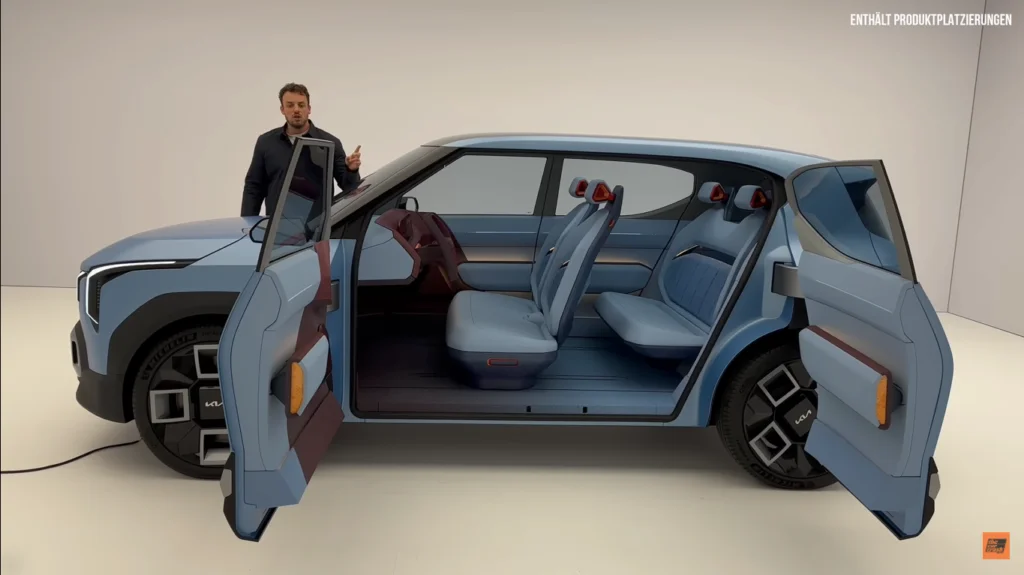
Unveiled during Kia EV Day 2025, the EV2 is the smallest and most budget-conscious model in Kia’s growing electric lineup. According to Orléans Kia, it blends hatchback styling with SUV proportions, making it perfect for tight city streets and short commutes. Its squared-off wheel arches and vertical LED headlights give it a bold look, while the compact size makes parking a breeze.

Kia-EV2-image credit-Clean Technica

Inside, the EV2 surprises with clever space-saving features. The cabin includes a sliding front bench seat, folding rear seats, and even removable Bluetooth speakers built into the doors. Kia showcased the interior concept during Milan Design Week, describing it as a “tranquil haven” for urban drivers. The flat floor plan allows for stretching out or even enjoying a meal, a rare luxury in a small SUV.

Kia-EV2-interior-image credit-Screen Guardian

Built on Hyundai’s E-GMP platform, the EV2 is expected to offer up to 300 km (186 miles) of range per charge. That’s more than enough for daily errands and weekend getaways. Kia will offer two battery options: a more affordable LFP battery for durability and a NCM battery for longer range and faster charging. The EV2 also supports Vehicle-to-Load (V2L) charging, so you can power small appliances or camping gear directly from the car.

Tech-wise, the EV2 doesn’t hold back. It’s expected to feature Kia’s latest ccNC panoramic infotainment system, with dual 12.3-inch screens for the driver and passenger. Over-the-air updates, regenerative braking, and a digital key system are also on the list. Safety features like automatic emergency braking, lane keeping assist, and blind spot monitoring will likely come standard.

But the real headline is the price. As noted by Expert Auto Life, the EV2 is expected to start around $30,000, making it one of the most affordable electric SUVs on the market. That’s a game-changer for drivers who want to go electric without breaking the bank.

Kia EV2-image credit-Yahoo

The EV2 will be built in Slovakia and is set to launch in Europe and select markets in early 2026. While it may not reach North America, it’s a strong signal that Kia is serious about making EVs accessible to everyone.

Sustainability and Materials

Kia-showcases-its-smallest-EV-concept-image credit-Car on phone

Kia is taking eco-conscious design seriously with the EV2. The cabin features bio-based materials like flax fiber, mushroom composites, and recycled textiles. According to Expert Auto Life, these materials not only reduce plastic use but also give the interior a warm, natural feel. Kia’s partnership with companies like Biomyc and Simplifyber shows a commitment to reducing the environmental impact of car production without sacrificing style or comfort.

Driving experience in the City

Kia-showcases-its-smallest-EV-concept-image credit-Car on phone

The EV2 is built for urban life. Its compact size, smooth acceleration, and quiet electric motor make it ideal for navigating traffic and tight parking spots. Reviewers from Orléans Kia note that the EV2 handles well on city streets and offers a surprisingly spacious feel inside. With regenerative braking and instant torque, it’s both efficient and fun to drive , especially for first-time EV owners.

With its smart design, flexible interior, and competitive pricing, the Kia EV2 is more than just a city car, it’s a statement. For urban drivers ready to ditch gas and embrace electric, this little SUV might just be the perfect fit.

NRSA urges drivers to exercise vigilance during this rainy season

0

The National Road Safety Authority is urging drivers to exercise increased vigilance, especially in mountainous areas where fog may reduce visibility.

Speaking to Adom News, Public Relations Officer Pearl Adusu emphasized the importance of proper vehicle lighting systems, particularly white and yellow lights, to improve visibility in foggy or rainy conditions.

Madam Adusu also advised against speeding, as reduced visibility makes it harder to react to sudden obstacles or road changes. She also advised drivers to follow the three-second rule, ensuring a safe following distance behind the vehicle in front, to allow sufficient time for braking and emergency maneuvers, saying that adherence to these guidelines could significantly improve road safety during the rainy season.

Safety tips for drivers during the rainy season

The rainy season presents several risk factors, especially in Ghana, that drivers cannot afford to ignore. During this period, road accidents tend to increase primarily due to reduced road friction and poor visibility.

Here are five safety tips to guide drivers during the rainy season.

Avoid speeding through standing water

When driving through standing water, reduce speed to avoid hydroplaning, where you lose traction and skid across the road. Drive around water-collected areas by changing lanes or steering safely. If hydroplaning occurs, gently release your foot off the accelerator and steer in a safe direction, avoid sudden turns, and avoid slamming on brakes.

Avoid sudden brakes

To avoid skidding on slippery, wet roads, steer clear of rapid curves and apply abrupt brakes. To prepare for such turns and regulate the speed appropriately, arm your vehicle with a dependable navigation system.

Drive at low speed

Don’t drive too fast in the rain, as the rains make the road slippery, reducing traction. If you need to brake quickly, especially for a full stop, it will take longer for the car to stop, but it won’t take longer if you drive slowly.

Avoid distractions

In Ghana, drivers often use their phones while driving, causing divided attention. To avoid this, focus on driving and avoid multitasking. Park in a secure area or use a hands-free device for phone calls, ensuring your two hands are in control of your steering wheel.

Keep the windows closed 

Closing the car windows can prevent water from getting inside and wetting the steering wheel, gear, seats, or mats, which could make driving uncomfortable.

Chrome gets a cyber shield as Android 16’s advanced protection takes the lead

0
Advanced-Protection-image credit 9TO5Google

In a world where cyber threats are growing smarter by the day, Google is stepping up its game. With the launch of Android 16, the tech giant has introduced a powerful new feature called Advanced Protection , and it’s giving Chrome on Android a serious security upgrade.

This isn’t just another privacy setting. It’s a full-blown cyber shield designed to protect users from hackers, spyware, and data theft. And while it’s built for high-risk individuals like journalists and public figures, anyone can turn it on to enjoy Google’s strongest mobile defenses.

What is advanced protection?

Advanced-Protection-image credit 9TO5Google

According to Android Authority, Advanced Protection is a system-wide security mode that activates Android’s highest-tier protections. Once enabled, it locks down your device and Chrome browser with three major features , all working quietly in the background.

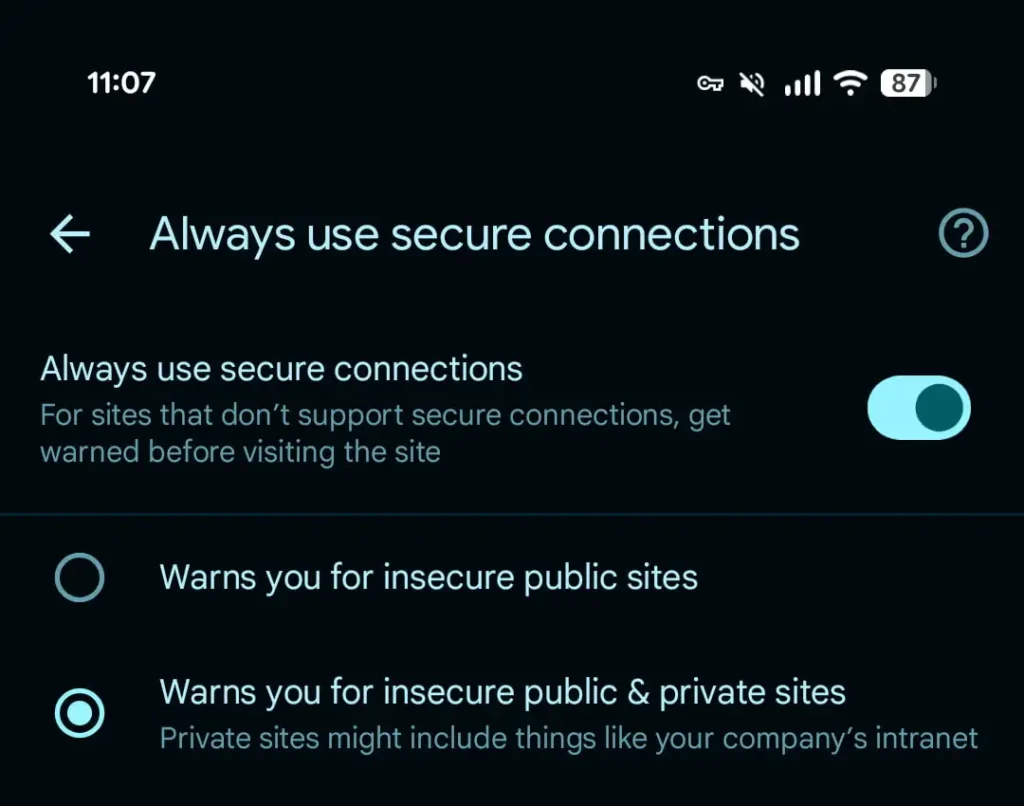
First, Chrome now forces secure HTTPS connections for every website. If a site uses the older, less secure HTTP format, Chrome will warn you before loading it. This helps block attackers from spying on your data or injecting harmful code into websites. As 9to5Google explains, this feature protects users even on risky networks like public Wi-Fi.

Second, Chrome introduces full site isolation. That means every website runs in its own memory space. If one site gets hacked, it can’t access data from another. This is a huge win against cross-site attacks, and it’s now available on Android devices with 4GB of RAM or more.

Third, Chrome disables JavaScript optimizers in its V8 engine. These tools usually make websites load faster, but they’ve also been used to exploit browser vulnerabilities. By turning them off, Chrome reduces the risk of attacks , even if it means sacrificing a bit of speed. According to Undercode News, this change could have prevented nearly half of past security bugs.

Turning On advanced protection

Chrome-Android-Advanced-Protection-image credit-9T05Google

To activate Android 16’s Advanced Protection, start by opening your phone’s settings. Navigate to the Privacy & Security section, where you’ll find the new Advanced Protection Mode. Tap to open it, then flip the switch to turn it on. For verification, the device may prompt you for your PIN, fingerprint, or face unlock. Once confirmed, the system instantly applies Google’s top-tier security settings and Chrome gets upgraded automatically.

What Chrome does differently

Advanced-Protection-image credit -Google security blog

With Advanced Protection enabled, Chrome enforces encrypted HTTPS connections across all websites. Any site that uses outdated HTTP will trigger a warning before it loads, helping users avoid risky pages or data leaks especially when browsing on public Wi-Fi.

Each tab in Chrome now operates in full isolation, meaning every website runs independently in memory. If one page becomes compromised, it can’t affect or peek into another strong defense against cross-site cyber attacks.

Chrome also disables JavaScript optimizers in its V8 engine. These tools typically boost website speed but have been used in the past to exploit browser vulnerabilities. Shutting them down reduces the browser’s attack surface significantly, prioritizing safety over speed.

For curious users and tech explorers

If you’d prefer to test these features without switching on the full Advanced Protection Mode, Chrome still offers manual controls. Visit chrome://flags in your browser, and search for HTTPS-Only Mode, Site Isolation, or V8 security tweaks. You can enable them one by one for partial protection, though they won’t offer the same locked-in strength.

Why it matters

Cybersecurity isn’t just for tech experts anymore. With phishing scams, spyware, and fake websites on the rise, everyday users need stronger protection. That’s why Google is making Advanced Protection easy to use ,just flip a switch in your Android 16 settings, and Chrome becomes a fortress.

As Google’s Chrome Security Team puts it, “Advanced Protection is no longer optional, it’s the new standard for mobile safety.”

Even better, many of these features are available manually in Chrome’s privacy settings. So if you’re not ready to turn on Advanced Protection, you can still boost your browser’s defenses one step at a time.

The bottom line

Android 16’s Advanced Protection is more than a tech upgrade it’s a statement. Google is saying that security should be simple, strong, and available to everyone. And with Chrome leading the charge, your phone just got a whole lot safer.

Full look: 2026 Aston Martin Vantage S revealed with 670hp

0
2026 Aston Martin Vantage S

Aston Martin has unveiled a more powerful, track-focused evolution of its entry-level sports car—the 2026 Vantage S—just 18 months after the original Vantage’s debut. This enhanced model boasts a significantly upgraded powertrain and chassis, aimed at delivering sharper dynamic performance.

The Aston Martin Vantage S is a new model that boosts the 4.0-liter twin-turbo V-8 engine’s output to 671 hp and 590 lb-ft of torque, with an eight-speed rear-mounted transaxle. The engine is controlled by a new throttle response curve, resulting in a 0-60-mph time of just 3.3 seconds.

The Vantage S also features an electronic limited slip differential for improved traction and cornering, and improved control software programming with a launch control function. The top speed is stated at 202 mph.

To handle the additional power and electronically enhanced control, Aston focused on improving the chassis. The Vantage S receives new suspension hardware, powertrain mounts, and a rear subframe mounted directly to the chassis. The engine also reworked the throttle pedal weight and response to better fit the “S” car’s feel. The rear subframe is now mounted directly to the body, replacing rubber bushings.

The Vantage S features 21-inch wheels with bronze-colored brake calipers, or carbon ceramics for larger front discs. The summer tires are Michelin Pilot Sport S 5 AMLs, while Pilot Alpin 5 AMLs are available for winter use. The multispoke wheels can be ordered in satin black with red accents.

With slick 2×2 twill carbon fiber trim and Alcantara and leather interior surfaces, the 2026 Aston Martin Vantage S boasts a distinctive interior design. The “S” emblems are embroidered in matching thread on the upper seat backs, and the Aston Martin badge is shown on the headrests in a first for the industry.

Additional options include full semi-aniline leather, chevron quilting, perforations in the seat upholstery, and a “Inspire Sport” theme that combines semi-aniline leather and Alcantara. The knurled drive mode rotary dial can be finished in either red or silver.