
- Advertisement -spot_img
Home Blog Page 11

Kia drops affordable 7-seater EV that’s loaded with tons of surprises

0
Kia Carens Clavis EV

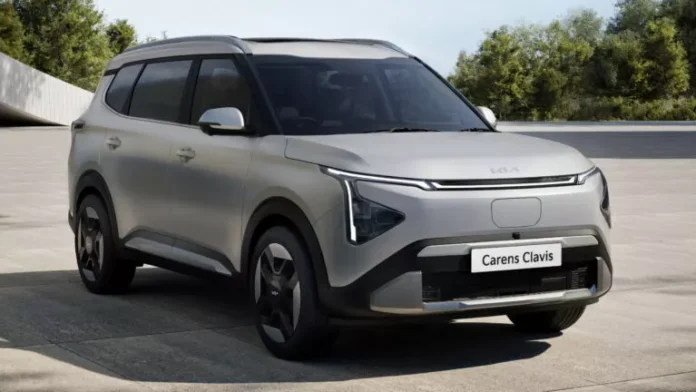
The electric car world is moving fast, and now even familiar models are getting exciting makeovers. One perfect example is the Kia Carens Clavis. When it was first unveiled in May 2025, many people thought it looked like an electric vehicle (EV) — and now we know why. Kia has officially introduced an all-electric version of the Carens Clavis, and it’s turning heads for the right reasons.

Kia Carens Clavis. Photo credit:Carcoops.com

This new EV is Kia’s first electric car made entirely in India, and it shows the brand’s serious interest in growing EV markets like India and beyond. According to a detailed report from Carscoops.com, the Carens Clavis EV keeps the cool, modern design of the petrol and diesel versions but adds some smart features to make it electric-friendly.

What’s new on the outside?

From the outside, you’ll notice some changes that make it stand out as an electric car:

  • The charging port is now at the front of the vehicle.
  • No more traditional grille — instead, you get a lit-up front end that looks futuristic.
  • The air intake has been removed since EVs don’t need as much cooling as gas engines.
  • New aero-friendly alloy wheels help reduce drag and improve battery efficiency.
  • Bright LED fog lights and a bold SUV-inspired look give the car a strong road presence.

Kia calls this a “lifestyle-ready recreational vehicle,” and it’s meant for families who want style, comfort, and cleaner energy in one package.

Spacious, Modern, and High-Tech Inside
Interior design of the Kia Carens Clavis

Step inside, and you’ll find a roomy three-row setup that can fit up to seven people. The Carens Clavis EV is about 4.5 meters long, and thanks to the missing gearbox (EVs don’t need one), the center console now “floats”, creating more legroom and storage space.

Tech lovers will enjoy the massive 26.6-inch digital display across the dashboard, standard on all models. Depending on the version you pick, you can get:

  • Ventilated front seats (great for hot days)
  • A premium Bose sound system
  • Ambient interior lighting
  • A panoramic sunroof
  • Level 2 driver assistance, with up to 20 safety features to help on the road
Interior design of the Kia Carens Clavis. Photo credit:Carcoops.com

For easier access to the third row, Kia added a “Boss Mode” in the second-row seats that lets you slide and fold them with just one touch.

Under the Hood: Power and Range

The Carens Clavis EV shares its foundation with other popular models like the Hyundai Creta and Kia Seltos, and that means proven reliability and performance. It comes in two versions:

  • Base Model:
    • 42 kWh battery
    • 133 horsepower
    • 404 km (251 miles) of range
  • Long Range Model
    • 51.4 kWh battery
    • 169 horsepower
    • 490 km (305 miles) of range

Both versions are equipped with liquid-cooled batteries, dust and water protection (IP67 rating), and Vehicle-to-Load (V2L) support — meaning you can even power small appliances using the car’s battery! Fast charging is supported up to 100 kW, so you won’t be stuck at a charger for long.

Kia Carens Clavis EV. Photo credit:Carcoops.com
How Much Will It Cost?

The electric Carens Clavis will be sold at different prices depending on the market, but in India (where it’s made), it will cost between ₹17.99 lakh and ₹24.49 lakh — that’s about $21,000 to $28,600.

For comparison, the petrol and diesel versions of the Carens Clavis cost between ₹11.50 lakh and ₹21.50 lakh (around $13,400 to $25,100).

The Kia Carens Clavis EV is a smart and stylish electric family vehicle that shows how automakers are adapting to changing times. With futuristic design, practical features, and solid driving range, it’s an exciting addition to Kia’s lineup — and especially important as it’s the company’s first EV made in India.

As reported by Carscoops.com, this move reflects Kia’s strategy to serve both local and global EV markets, offering affordable electric options without sacrificing quality or design.

Tired of Microsoft’s mandatory login? Here’s how to break free

0
image credit-tomshardware

If you’ve recently bought a Windows computer, you’ve probably noticed something frustrating: Microsoft really wants you to sign in with a Microsoft account. Whether you’re setting up a new PC or updating Windows, it feels like there’s no way around it. But guess what? You can break free , and we’re here to show you how in this article.

Microsoft claims that using a Microsoft account helps you sync files, access OneDrive, and enjoy better security. That’s true to an extent. But for many users, especially those who just want a simple offline experience, it feels more like a trap than a feature. According to The Verge, even Windows 11 Pro now requires a Microsoft account during setup. That means no easy way to use your PC without signing in online.

Image credit-wiki how

Here’s the good news: you can still create a local account, it just takes a few extra steps. The trick is to disconnect from the internet before setup. Unplug your Ethernet cable or turn off Wi-Fi. Once you are offline, Windows will quietly offer you the option to create a local account. It may be hidden behind a button like “Sign-in options” or “Offline account,” but it’s there. If you’re using Windows 11 Pro, look for the “Limited experience” option when prompted to sign in. That’s your gateway to a local account.

Already signed in with a Microsoft account and want to switch? It’s possible. Just head to Settings, then Accounts, and click on Your Info. From there, you’ll see the option to “Sign in with a local account instead.” Follow the prompts, and you’ll be back in control. How-To Geek offers a helpful breakdown of this process if you need more guidance.

image credit-tomshardware

Of course, going local has its pros and cons. On the plus side, you won’t need to remember another password, your files won’t automatically sync to OneDrive, and you’ll enjoy more privacy. On the downside, you’ll lose access to some Microsoft Store apps, and features like Find My Device won’t work. It’s a trade-off, but for many users, especially those who value simplicity and control it’s worth it.

Microsoft’s login strategy

Microsoft didn’t always require online accounts. Back in the Windows 7 and early Windows 10 days, users could easily set up their PCs with local accounts, no internet needed, no pressure to sign in. But as cloud services grew and Microsoft pushed its ecosystem harder, the company began nudging users toward online accounts. With Windows 11, that nudge became a shove. According to Tom’s Hardware, even tech-savvy users are finding it harder to avoid the login wall.

This shift reflects Microsoft’s broader strategy to unify devices and services under one identity. It’s convenient for syncing across devices, but it also raises questions about user autonomy and data privacy.

Microsoft’s push for online accounts isn’t going away anytime soon. But that doesn’t mean you have to follow the crowd. Whether you are setting up a new PC or reclaiming control of your current one, switching to a local account gives you freedom and peace of mind. As PCWorld puts it, “You don’t have to play by Microsoft’s rules if you know the shortcuts.”

So go ahead, break free. Your computer, your rules.

5 Google map tips every driver should know

0
Google map

Google Maps has become the go-to for modern-day drivers with the help of smartphones, helping people who barely have knowledge of where they are to move from A to B, either on foot, by private, or public transportation.

Google Maps provides real-time updates and route recommendations, whether you’re traveling to a new location or simply attempting to avoid a traffic bottleneck on your usual route. However, there are several features on the map that most users are not familiar with. Let’s look at some map tips that will help drivers navigate the roads better using Google Maps.

In-app shortcut

Google Maps offers various ways to quickly check traffic flow in your area or commute. By setting up your work and home address on Google Maps, you can access your commute’s traffic with a single press of a button. Additionally, you can create a driving shortcut by selecting the Menu in the top left, followed by Settings, Navigation Settings, and Add Driving shortcut. This shortcut will display ETAs on your regular journeys on your device’s home screen.

Use offline maps

Google Maps offers offline maps that allow users to navigate in remote areas without cellular signals. Drivers should always check their routes and download offline maps, especially on long trips, as spots with poor cellular reception may be present. Offline maps provide a seamless navigation experience.

Understand the colours on the routes

You must have noticed the colourful lines (green, red, yellow, blue, purple, and brown) and wondered what they mean.

Green Lines: A green line on your route in Google Maps means that the road is clear with no traffic. You can expect a smooth and quick drive without any interruptions.

Yellow or Orange Lines: Yellow or orange lines suggest that there is moderate traffic on the road. Your travel may be slightly slower, but there won’t be any major delays. It’s still a fairly good route to take.

Red Lines: A red line is a warning. It means heavy traffic or congestion. If the red is dark or thick, it indicates a severe jam. You might want to look for alternate routes if you’re in a hurry.

Blue Line: A blue line highlights the recommended route from your starting point to your destination. It helps you follow the right path.

Purple Line: This line indicates an alternate or longer route, which may have minor traffic. It’s usually shown when avoiding traffic on the main route.

Brown Line: The brown line means the road goes through hilly or elevated areas. It helps you understand terrain changes, especially when travelling in rural or mountainous regions.

Save your regular routes

To save time and avoid repetitive searches for routes, use Google Maps to save Home and Work locations. Open the search bar, tap “Home” or “Work”, and enter the address. Save other locations by opening the listing, tapping “Save,” and selecting a list. Once saved, tap on these locations to open the route instantly. This helps save time and improves navigation.

Use Incognito for privacy

Google Maps offers an Incognito mode that prevents location searches, navigation history, and visited places from being saved to your account. This mode is used to keep certain activities private and prevent personalization of your Maps experience. To activate Incognito mode, open Google Maps, tap on your profile picture, and select “Turn on Incognito mode.” However, this mode prevents saving locations, downloading offline maps, and accessing other features.

Your Google searches are about to feel like conversations, thanks to advanced AI capabilities

0
Google search. Source: Google

Google is introducing Gemini 2.5 Pro to AI Mode, providing users with access to its most intelligent AI model in Search. This model excels at advanced reasoning, math, and coding questions, helping users with complex queries with links to learn more.

The tech giant made this announcement on July 16, 2025, and introduced a new agentic feature to help users get even more done.

Subscribers can select the 2.5 Pro model from a drop-down menu in the AI Mode tab. The default model in AI Mode will continue to be helpful for fast, all-around assistance on most questions.

For more thorough responses, Google is introducing Deep Search with the Gemini 2.5 Pro model. Deep Search is Google’s most advanced research tool in Google Search, helping users save hours by issuing hundreds of searches, reasoning across disparate information, and crafting a comprehensive, fully-cited report in minutes.

Source: Google

It is especially useful for in-depth research related to jobs, hobbies, or studies, and is valuable for making big life decisions like purchasing a new house or needing assistance with financial analysis.

For Google AI Pro and AI Ultra subscribers in the U.S., Deep Search and Gemini 2.5 Pro are starting to roll out this week for those who opted into the AI Mode experiment in Labs. Additionally, Google is introducing AI-powered calling to local businesses, allowing users to get pricing and availability information on their behalf without needing to pick up the phone.

Drone vs. F1: The sky racer that leaves a Formula 1 car in the dust

0
Image credit-TecheBlog

In a world-first moment that stunned motorsport fans and tech lovers alike, a custom-built racing drone kept pace with Max Verstappen’s Formula 1 car—the RB20—at Silverstone Circuit. Yes, you read that right. A flying machine matched the speed and agility of one of the fastest cars on Earth.

The drone, designed by Dutch Drone Gods in partnership with Red Bull Racing, wasn’t just fast, it was revolutionary. According to DroneXL, the drone hit speeds of over 350 km/h and accelerated from 0 to 300 km/h in just 4 seconds, beating the F1 car in straight-line acceleration. But this wasn’t just a drag race. The drone had to follow Verstappen’s car through tight corners, rapid braking zones, and high-speed straights, all while filming with two 4K cameras.

The Red Bull Drone 1 seen in Silverstone-Image credit-dronelife

The pilot behind the controls, Ralph Hogenbirk, flew manually using FPV goggles, reacting in real time to Verstappen’s every move. No GPS. No auto-tracking. Just pure skill. “I didn’t recognize the drone; I didn’t know it was following me… it was very close in some places, so it’s great to see,” Verstappen said after the flight, clearly impressed by the drone’s performance.

This feat wasn’t easy. The drone had a battery life of just 3 minutes, and its rotors spun at 42,000 rpm, generating enough thrust to stay airborne and match the car’s pace. Engineers had to overcome overheating issues, aerodynamic challenges, and signal interference. But after months of trial and error, the drone completed a full lap behind Verstappen marking a new chapter in sports filming.

Image credit-TNW

According to AV Interactive, this drone is the first of its kind to keep up with an F1 car for an entire lap. It’s not just about speed, it’s about precision. The drone had to dive, climb, and bank in sync with the car, staying within meters of it while capturing cinematic footage.

The implications are huge. This could change how fans experience Formula 1. Imagine watching a race from above, with drones weaving through the track, offering angles never seen before. It’s not just thrilling, it’s immersive.

While there are no plans yet to use drones in live F1 broadcasts, the success of this project opens the door. With further testing and safety improvements, drones could become part of the future of motorsports coverage.

For now, the Red Bull Drone 1 stands as a symbol of what’s possible when engineering meets imagination. It didn’t just chase a car, it chased history.

Engineering marvel

Image credit-TecheBlog

Built by the Dutch Drone Gods in collaboration with Red Bull Racing, this drone was designed specifically to chase a Formula 1 car—Max Verstappen’s RB20—around the Silverstone Circuit. According to Red Bull, it reached a top speed of 350 km/h and accelerated from 0 to 300 km/h in just 4 seconds, outpacing the F1 car in straight-line speed.

Its body is made from carbon fiber, glass fiber, and 3D-printed polymers, keeping the weight under 1 kg. That lightweight frame is crucial for agility and speed, especially when diving into corners or climbing above turbulent air.

Power and limitations

The drone’s rotors spin at a mind-blowing 42,000 rpm, generating enough thrust to stay airborne and match the car’s pace. But all that power comes at a cost: the battery lasts just 3 minutes. That’s barely enough for one lap but it’s all the drone needed to make history.

Cinematic precision

Image credit-Motorsport

Equipped with two 4K cameras, the drone captured stunning footage while flying just 1–2 meters above the car in corners and up to 20 meters on straights. The pilot, Ralph Hogenbirk, flew manually using FPV goggles no GPS, no auto-tracking. He had to react in real time to Verstappen’s braking, acceleration, and cornering.

Human skill meets machine speed

Image credit-Red Bull

Flying at these speeds isn’t just technical, it’s mental. The pilot described the experience as an “out-of-body” moment, where his mind felt fully connected to the drone. He had to stay calm, focused, and responsive, adjusting altitude and angle constantly to keep the car in frame.

What this means for the future

The success of the Red Bull Drone 1 isn’t just a cool stunt, it could change how we watch sports. Traditional cameras are limited by trackside positions and fixed angles. But drones like this one can fly above, behind, and beside athletes in real time, offering views that were once impossible.

According to DroneXL, this technology could lead to live drone coverage in future races, once safety and signal reliability are perfected. It’s not just about racing either, other sports like cycling, skiing, and even football could benefit from dynamic aerial footage.

Beyond sports, this innovation pushes drone engineering to new heights. The Red Bull Drone 1 had to overcome overheating, battery limits, and aerodynamic challenges. These lessons could lead to better drones for filmmaking, search and rescue, and even delivery services.

In short, this race wasn’t just between a car and a drone it was a race toward the future.

What’s next?

The team hopes to upgrade the drone with live-streaming capabilities, which could revolutionize how fans experience motorsports. Imagine watching a race with drones zipping through the track, offering dynamic, real-time aerial views. As DroneXL notes, this project wasn’t just about speed, it was about pushing the limits of drone technology and storytelling.

Watch video below

video credit-peeper

How automatic transmission works: A beginner-friendly guide

0
how automatic transmission works- image credit-The Zebra

If you’ve ever wondered how a car can shift gears without you doing anything, welcome to the world of automatic transmission. For beginners, it’s one of the most user-friendly systems in modern vehicles. Unlike manual cars that require constant gear changes and clutch control, automatic cars do the heavy lifting for you making driving easier, safer, and more enjoyable.

According to HowStuffWorks, the magic behind automatic transmission lies in a clever combination of mechanical parts and fluid dynamics. The key player is the torque converter, which replaces the clutch found in manual cars. It connects the engine to the transmission and uses transmission fluid to transfer power. When you press the gas pedal, the torque converter spins and sends energy to the transmission, which then decides which gear to use based on your speed and engine load.

image credit-The Zebra

Inside the transmission, a set of gears called the planetary gearset does most of the work. This gearset includes a sun gear, planet gears, and a ring gear. By locking and unlocking different parts of this system, the transmission can shift between gears smoothly. You don’t feel the change, but it’s happening constantly as you drive. The result? A seamless ride that adjusts to your driving conditions without any manual input.

Modern automatic transmissions also rely on a control system, often managed by a computer called the Transmission Control Unit (TCU). This system uses sensors to monitor your speed, throttle position, and engine performance. Based on this data, it decides when to shift gears for optimal performance and fuel efficiency. If you’re climbing a hill, the system might hold a lower gear for more power. On a highway, it shifts to a higher gear to save fuel.

As AutoDNA explains, there are several types of automatic transmissions. The most common is the traditional automatic transmission (AT), which uses hydraulic systems and torque converters. Then there’s the continuously variable transmission (CVT), which doesn’t use gears at all but instead relies on pulleys and belts to provide an infinite range of gear ratios. CVTs are known for their smooth acceleration and fuel efficiency. Other types include dual-clutch transmissions (DCT) and automated manual transmissions (AMT), each offering different benefits in terms of performance and cost.

For new drivers, automatic cars are a great starting point. You only need to use your right foot for both the brake and accelerator. The gear selector typically includes P (Park), R (Reverse), N (Neutral), and D (Drive). Some cars also offer L (Low) or S (Sport) modes for special driving conditions like steep hills or towing.

Image source-Tyre point

In short, automatic transmission is like having a smart assistant under the hood. It handles gear changes, adapts to your driving style, and helps you focus on the road. Whether you’re navigating city traffic or cruising on the highway, it’s designed to make driving simpler and more comfortable.

While automatic transmissions offer ease and comfort, manual transmissions still have their fans. In a manual car, the driver uses a clutch pedal and gear stick to change gears manually. This gives more control over the vehicle, especially in performance driving or on steep hills. According to The Engineers Post, manual transmissions are often cheaper to maintain and can offer better fuel efficiency if driven correctly. However, they require more effort and skill, especially in heavy traffic.

Automatic transmissions, on the other hand, are ideal for city driving and long trips. They reduce driver fatigue and are easier to learn. As Volvo Baar explains, modern automatics also work well with driver assistance systems, making them safer and more advanced. While they may cost more upfront and in repairs, the convenience they offer is hard to beat.

Ghana launches campaign to promote online and cybersecurity awareness

0
Director-General of the Cyber Security Authority, Mr. Divine Selase Agbeti. Source: JoyOnline

Cyber Security Authority (CSA) has officially launched the ‘Safer Digital Ghana’, an initiative aimed at promoting online security and cybersecurity awareness among Ghanaians.

The campaign, which was launched on July 16, 2024, seeks to educate citizens on the importance of cybersecurity and provide them with the necessary skills to protect themselves from cyber threats. It is expected to reach various campuses, including Senior High Schools.

It also aims to promote cybersecurity best practices, combat cybercrime, and enhance digital resilience among individuals, schools, communities, and institutions. It also raises awareness of the Cybersecurity Act, 2020 (Act 1038), promoting digital resilience.

According to the authority, the campaign will span all the regions in Ghana via several different formats to enhance reach. Campaign messages have also been translated into various local languages to make them more accessible and easier for people to understand.

The campaign targets four groups, including children, the general public, businesses, and government agencies. It covers topics like cyberbullying, digital footprint, password hygiene, parental control, online scams, social engineering, phishing, account takeovers, fake news, supply chain risks, email compromise, and backup plans. Key topics include insider threats and incident reporting.

The Director-General of the Cyber Security Authority, Divine Selase Agbeti, emphasized the campaign’s significance in reducing cybercrime in Ghana, stating that cybersecurity is not solely the responsibility of institutions but also requires every Ghanaian to actively protect themselves and their communities online.

“The Cyber Security Authority is committed to promoting cybersecurity awareness and protecting Ghanaians from cyber threats. We believe that by working together, we can create a safer and more secure digital environment for everyone.”

The CSA is a state agency that is mandated to build a Resilient Digital Ecosystem, Secure Digital Infrastructure, Develop National Capacity, Deter Cybercrime, and Strengthen Cybersecurity Cooperation.

Microlino: The Bubble car that’s cute, costly, and questionable

0
The Microlino car-image credit Microlino Car

In a world of sleek electric SUVs and futuristic sedans, the Microlino dares to be different. This tiny, retro-inspired EV from Swiss company Micro Mobility is turning heads across Europe and soon, the UK. With its bubble-like shape and front-opening door, it’s a modern tribute to the 1950s BMW Isetta. But while it scores high on charm, the Microlino raises serious questions about value, safety, and practicality.

According to Autocar, the Microlino is officially classified as a quadricycle, not a full car. That means it doesn’t have to meet the same safety standards as regular vehicles. It’s just over 2.5 meters long, seats two people on a bench, and opens from the front like a fridge. It’s designed for short city trips, not long-distance travel.

The Microlino car-image credit Microlino Car

The Microlino comes with three battery options: 5.5kWh, 10.5kWh, and 15kWh. These offer ranges of 58, 110, and 142 miles respectively. Its 17-horsepower motor delivers a top speed of 56 mph, which is fine for urban driving but not suitable for highways. Charging is simple, it plugs into a regular household socket and takes about four hours to fully charge. That’s convenient, but don’t expect fast-charging capabilities.

Inside, the Microlino is surprisingly refined for a quadricycle. As Microlino Car explains, it features a steel and aluminum safety cell, a digital display, and even a sunroof. The 230-liter trunk is roomy enough for groceries or a weekend bag. But it lacks basic safety features like airbags, ABS, and stability control. Steering is unassisted, and braking can feel unstable under pressure.

The price is where things get tricky. In Europe, the Microlino starts at €17,990 (around £15,400) and goes up to €21,990 (£18,800) for the top model. That’s more than double the cost of rivals like the Citroën Ami, which sells for just £7,695. For the same money, you could buy a full-size car like the MG4 or a well-equipped Kia Picanto.

The Microlino car-image credit – Autocar

Driving the Microlino is a mixed experience. It’s fun, nimble, and undeniably charming. But it’s also narrow, bouncy over potholes, and not ideal for long trips. It’s best suited for short urban commutes, station runs, or as a second car. Think of it less as a car and more as a stylish mobility gadget.

The Microlino isn’t trying to be a car for everyone. It’s aimed at city dwellers, eco-conscious drivers, and those who value style over speed. According to Microlino Car, the vehicle is perfect for short trips, quick errands, and navigating tight urban spaces. Its small size makes parking a breeze, and its low energy use means it has a much smaller environmental footprint than traditional cars. It’s also being considered for car-sharing programs and could be ideal for hotels, resorts, or gated communities where short-distance travel is common.

A closer look: Is the Microlino really worth it?

The Microlino car-image credit – The Verge

While the Microlino is undeniably charming, it’s not without serious flaws. According to CAR Magazine, the vehicle is technically a quadricycle, which means it doesn’t meet the same safety standards as regular cars. It lacks airbags, ABS, and stability control features that are standard even in the cheapest hatchbacks. Braking can feel unpredictable, and the steering is light and unresponsive, especially at low speeds. In emergency situations, its narrow shape and low weight make it feel unstable.

Performance is also limited. The 17-horsepower motor gives it a top speed of 56 mph, which is fine for city driving but not much more. Acceleration is slow, and it struggles on hills or open roads. Even in sport mode, it doesn’t offer much excitement. As Top Gear notes, an electric scooter could outrun it in a sprint.

Image credit-Electrive

Then there’s the price. Starting at around £15,400 and rising to nearly £19,000 for the long-range version, the Microlino costs more than full-size cars like the Kia Picanto or MG4. That’s a tough sell when you consider its limited range, slow charging, and minimal safety features. It’s also more expensive than rivals like the Citroën Ami, which offers similar functionality for half the price.

Inside, the Microlino tries to impress with a digital display, sunroof, and vegan leather options. But some materials feel flimsy, and there’s no built-in infotainment system—you’ll need your phone for navigation and music. The boot is roomy for its size, but the cabin can feel cramped for two adults, especially on longer trips.

In short, the Microlino is best suited for short city commutes or as a stylish second car. It’s more of a fashion statement than a practical vehicle. If you live in a dense urban area and want something unique, it might be a fun choice. But for most drivers, it’s a costly compromise, fun to look at, but hard to justify.

Toyota’s next adventure van could be a Land Cruiser-inspired minivan

0
Toyota’s next adventure van-image credit-Hot cars

Toyota is known for building tough, reliable vehicles from the rugged Land Cruiser to the family-friendly Sienna. But now, the Japanese automaker might be blending those two worlds with a new kind of vehicle: a Land Cruiser-inspired minivan. Based on the bold X-Van Gear Concept, this upcoming model could change how people think about minivans.

According to Carscoops, Toyota is rumored to be working on a production version of the X-Van Gear, first revealed in 2023. The concept was designed for families who love adventure but want the comfort and space of a van. With chunky body panels, dual sliding doors, and a boxy shape, the X-Van Gear looks more like an SUV than a typical minivan. It’s being called the “Land Cruiser of minivans” for good reason.

image credit-Hot cars

The van is expected to share its platform with Toyota’s Noah and Voxy models, which means it will likely use the TNGA-C architecture. Powertrain options could include a 2.0-liter gasoline engine or a 1.8-liter hybrid, both with optional all-wheel drive. That makes it suitable for weekend getaways, light off-roading, or just tackling rough city roads with confidence.

Inside, the X-Van Gear promises flexibility. The concept featured three rows of seats that could be rearranged for different uses—like turning the cabin into a sleeping area or a mobile dining space. While the futuristic dashboard from the concept may be toned down for production, Toyota is expected to keep clever storage solutions and practical tech features.

The van’s dimensions are similar to the Noah, measuring 4,695 mm in length with a 2,850 mm wheelbase, but the design gives it a more adventurous feel. One standout feature is the possible removal of B-pillars, which would make entry and exit easier and give the cabin a more open, airy vibe. However, this could pose challenges for safety standards, so it’s unclear if that detail will make it to production.

Image credit-carscoop

As V3Cars reports, Toyota showcased the X-Van Gear at the 2025 Bharat Mobility Expo, where it was praised for blending utility and comfort. The concept was aimed at people with active lifestyles who want more space than an SUV offers but still crave rugged styling.

If the rumors are true, the production version could debut at the 2025 Japan Mobility Show or the 2026 Tokyo Auto Salon. Pricing is expected to start around ¥3.5 million (roughly $23,500), placing it slightly above the Noah but still within reach for many families.

While Toyota hasn’t officially confirmed the launch, the idea of a minivan that’s ready for adventure is already turning heads. If it does hit the market, the X-Van Gear could compete with models like the Mitsubishi Delica D:5 and offer a fresh take on what a family vehicle can be.

How it compares: Toyota vs. Mitsubishi’s adventure Van

Image credit-Hot cars

If Toyota does launch the X-Van Gear, it will likely compete with the Mitsubishi Delica D:5, a long-time favorite among Japan’s outdoor enthusiasts. According to TechStory, the Delica is known for its off-road ability, spacious interior, and flexible seating, traits Toyota seems to be targeting with its new van. Both vehicles offer all-wheel drive, three-row seating, and modular cabins designed for camping or family outings.

The Delica has built a loyal following thanks to its rugged build and practical features. Toyota’s X-Van Gear, with its bold design and rumored B-pillar-free entry, could offer a more modern and stylish alternative. If priced competitively, it might even attract buyers who want SUV looks with minivan comfort.

Mercedes-Benz now allows you to join Teams calls in your car

0
Mercedes-Benz and Microsoft. Source: Mercedes-Benz

Mercedes-Benz is moving your office into your car with an expansion of its partnership with Microsoft, which will now allow drivers to join Microsoft Teams meetings even while driving.  This involves using the integrated vehicle camera even while driving. Using a video camera while driving would otherwise be a huge no-no for obvious reasons, but Mercedes and Microsoft believe it’s all good as long as you do it for work.

This innovation is coming to the all-new CLA, with which customers will be able to access the latest version of the Meetings for Teams app. Users will also be able to use the built-in vehicle camera to participate in Teams calls on the move.

This feature is approved for use on the move and minimizes distraction, as the meeting video stream automatically turns off upon activation. The updated app also offers an efficient way for business customers to work within the vehicle, with a new dashboard, “Next Meetings” function for upcoming appointments, quick access to frequent contacts, an expanded chat function, voice control for text input, and the ability to jump directly from the calendar into a Teams meeting. The camera can be turned off at any time.

 The company revealed it is also working with Microsoft on bringing Microsoft 365 Copilot into the vehicle. Rollout of the productivity enhancements will start this summer with the MB.OS powered fourth-generation MBUX in the new CLA.